
Public sector banks' (PSBs') employee count grew for the first time in five years while private sector banks' staff strength saw a decline in 2024-25 (FY25), according to latest data released by the Reserve Bank of India (RBI). The employee count of state-owned lenders rose 0.22 per cent year-on-year (Y-o-Y) to 757,641 at the end of March 31, 2025 from 756,015 in FY24.

Prosus, the Amsterdam-based technology investor with net assets valued at over $200 billion spanning payments to e-commerce, has identified India as one of its most critical growth markets, and is increasing its strategic investments here.

In March this year, Worldline India launched Vabox (Voice Alert Box): merchants will now get instant audio alerts on the settlement of UPI (Unified Payments Interface) payments via QR codes in languages of their choice when customers check out. "They needn't worry whether the amount has been credited to their account," says Gulshan Pruthi, the firm's executive vice-president. The French payments giant will roll out 500,000 Vaboxes in the initial phase.

While gold continues to provide safety after its strong 2025 rally, well-chosen real estate investments held with a long-term view remain attractive.

The Reserve Bank of India's (RBI's) Payment Systems Report highlighted that between 2019 and 2024, credit card transactions doubled in volume and almost tripled in value. During the same period, however, debit card transactions witnessed a decline, both in volume and value.

Tier-II, Tier-III, and rural regions accounted for 62 per cent of all new health insurance policies sold by insurers so far in 2025-26 (FY26), according to a Policybazaar report. These regions are also witnessing a rise in the sum assured opted by customers.

'Illegal gambling operators are systematically exploiting India's advertising and payment infrastructure, siphoning off crores of rupees from outside the country.'

Before signing up for a BNPL plan, read the fine print carefully and watch for red flags like unclear repayment terms, vague information on interest or late fees, and marketing that downplays the cost of default.

Once implemented, customers making payments using Rupay card or BHIM UPI will get a cashback of 20 per cent of the total GST amount, subject to a maximum of Rs 100.

State-owned banks have received guidance from the government to close Jan Dhan accounts whose beneficiaries are unwilling to keep them active, amid rising instances of such accounts being misused by fraudsters as mule accounts to defraud people, people aware of the development said.

'It is not looking at valuation, but investment, growth and ultimately better profit for stakeholders.'

Reserve Bank of India governor Shaktikanta Das on Monday said payments through UPI (unified payment interface) have grown exponentially in the past 12 months with daily transactions crossing 36 crore, which is up 50 per cent from 24 crore in February 2022. In value terms, these transactions are worth Rs 6.27 lakh crore, registering a growth of 17 per cent from Rs 5.36 lakh crore in February 2022, the governor told reporters while launching the Digital Payments Awareness Week at the RBI headquarters in Mumbai this afternoon. He also said the overall monthly digital payment transactions crossed over Rs 1,000-crore-mark each month during the past three months.
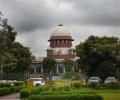
The Supreme Court has sought responses from the Centre and others on a plea challenging the validity of a provision of the Income Tax Act that allows political parties to receive "anonymous" cash donations below Rs 2,000.

'The Indian consumer is moving so quickly and they have so many options.'

Under the defence partnership, India and the UAE are eyeing defence industrial collaboration and cooperation in advanced technologies, cyberspace training, special operations, interoperability of their militaries and counter terrorism.
India's second-largest telecom service provider Bharti Airtel will call in March 2026 the final tranche of about Rs 15,741 crore from its 2021 rights issue of Rs 21,000 crore, proceeds from which will be used towards retiring majority of non-government-related debt.

WhatsApp on Wednesday announced the expansion of its payments service in India to make it easier for people transacting with businesses to pay for purchases directly in the chat, with a choice of UPI apps, including rival digital payment options, as well as credit and debit cards. Meta founder and CEO Mark Zuckerberg asserted that India is leading the world in people and businesses embracing messaging. WhatsApp said it is working with partners Razorpay and PayU "to make paying for something as simple as sending a message", as the Meta-owned platform unveiled a host of new features to woo businesses in India's booming commerce market.

Lacking basic safeguards and regulations, India is fast emerging as a hub for illegal online betting and gambling market, with the top 15 such unauthorised platforms logging an alarming over 5.4 billion visits in FY25, according to a report by public policy think-tank on consumer sovereignty.
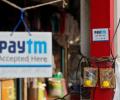
Digital payments and financial company Paytm is looking to hive off its payment aggregator business into a new subsidiary Paytm Payments Services Limited, according to a notice sent to shareholders for approval. The company is seeking approval of the same from its shareholders through an extraordinary general meeting on September 23. "To consider and approve transfer of Payment Aggregator business to Paytm Payments Services Limited, a wholly owned subsidiary of the Company, to comply with Reserve Bank of India guidelines, being considered as sale of undertaking," the EGM notice issued on August 31 said.

The number of digital financial frauds rose more than four times in FY24 year-on-year to comprise 80 per cent of all financial frauds.

In the wake of scrapping of old Rs 500/1,000 banknotes, Niti Aayog has asked National Payments Corporation of India to frame a new scheme to incentivise digital payments.

IT services firm HCLTech on Monday reported a 11.2 per cent decline in consolidated net profit to Rs 4,076 crore in the October-December quarter of FY26.

'I do believe there will be a resolution in the next couple of months on the penal tariff and hopefully on the reciprocal tariff also.'

'The introduction of a reasonable MDR for large merchant transactions will allow the industry to continue investing in innovation, cybersecurity, grievance redressal, and merchant support, ultimately ensuring that UPI continues to thrive.'

With winter holidays approaching, some Indian travellers will venture abroad. Many will be underprepared for medical and other travel-related risks. Trip disruptions, missed connections, and steep medical costs in developed countries can leave travellers exposed if they underestimate the coverage they need.

Trai has ordered BFSI firms to move service and transaction calls to the 1600 series from 2026 to reduce spam, financial fraud, and rising digital arrest scams.

A growing preference for convenience products and hybrid media consumption, and a surge in digital engagement have led to a rise in the average basket size for fast-moving consumer goods (FMCG) among rural consumers. The average of the rural FMCG basket saw a 60 per cent rise from 5.8 in 2022 to 9.3 in 2024 as it expanded to include convenience products like ready-to-eat packages and beverages, stated the fifth edition of the Rural Barometer Report, brought out jointly by GroupM and Kantar, which surveyed 4,376 rural adults across 20 states.

While UIDAI has given a nod for face authentication, banks need to join the process.

Reliance Jio, India's biggest telecom operator, is planning to launch an initial public offering (IPO) and listing on bourses in the first half of 2026, billionaire Mukesh Ambani said on Friday. Jio is currently a unit of Reliance Industries Ltd, India's most valuable company.

Reserve Bank Governor Sanjay Malhotra on Wednesday exhorted the fledgling fintech ecosystem to focus on the underserved sections of the society to deepen financial inclusion. Speaking at the annual Global Fintech Fest in Mumbai, Malhotra accepted that serving the "privileged" will be a lucrative business, but urged the smaller companies to focus on the underserved.

Edtech unicorn PhysicsWallah on Thursday fixed a price band of Rs 103-109 per share for its upcoming initial public offering (IPO), aiming for a valuation of over Rs 31,500 crore at the upper end. The company's Rs 3,480-crore maiden public offering will open on November 11 and conclude on November 13 and anchor investors will be allocated shares on November 10, according to its public announcement.

Bharti Airtel aims to leverage its 180 million plus digital service customers and its wide presence in rural areas to grow its payment bank business. "We are well placed as we can leverage the 180 million plus customers we have across our digital assets. "We offer a plethora of services such as lucrative interest rates, gift cards, FASTag, telecom recharges, payments and debit cards. "Our large merchant base of more than eight million allows us to drive both engagement and monetisation.

Nearly 7 out of every 10 P2M UPI transactions take place in high frequency categories like groceries, restaurants, pharmacies, fuel service stations, bakeries and utility services such as electricity, gas, water and sanitation.

Delhi Education Minister Ashish Sood announced the installation of air purifiers in 10,000 classrooms to combat pollution and ensure clean air for students, criticizing the previous government's approach.

Let's work flat out and create a policy framework that fosters the growth of Indian non-family business VC and private equity firms. This will allow our Indian startups' dreams to flourish, explains Ajit Balakrishnan.

Reserve Bank Governor Sanjay Malhotra on Wednesday said there is no proposal to levy any charge on UPI transactions.
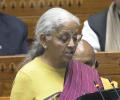
This Budget positions India's taxation ideology as not merely a revenue source but as a strategic catalyst for growth, inclusion and long-term confidence.

To digitise Customs processes, the Union finance ministry is planning to integrate the Indian Customs Electronic Gateway (ICEGATE), Risk Management System (RMS), and Indian Customs Electronic Data Interchange System (ICES) into a single unified national Customs platform, according to government sources.
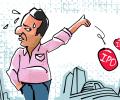
Companies are primarily using funds raised through fresh equity issuance to repay existing debt, followed by allocation for capital expenditure, according to a study by Bank of Baroda of over 200 filings with the market regulator between April and October 2025. The report stated that of these filings with the Securities and Exchange Board of India (Sebi) - covering both funds already raised in FY26 and future intent - 189 companies provided clear data on the purpose of the fund-raising.

India and Russia have agreed to encourage joint manufacturing of military hardware and spare parts in India, aiming to improve maintenance of Russian-origin defence equipment and boost overall bilateral defence cooperation.
